Home > News & Blog > Glass Tempering Furnaces: The Ultimate Guide to Types, Working Principles, Technologies & Selection
A glass tempering furnace is an industrial heat treatment system used to produce tempered safety glass. It heats annealed glass to approximately 620–700°C (1148–1292°F) and then rapidly cools both surfaces with high-pressure air. This process creates permanent compressive stress on the surface and tensile stress inside the glass, making it four to five times stronger than ordinary annealed glass while improving impact resistance, thermal shock resistance, and safety.
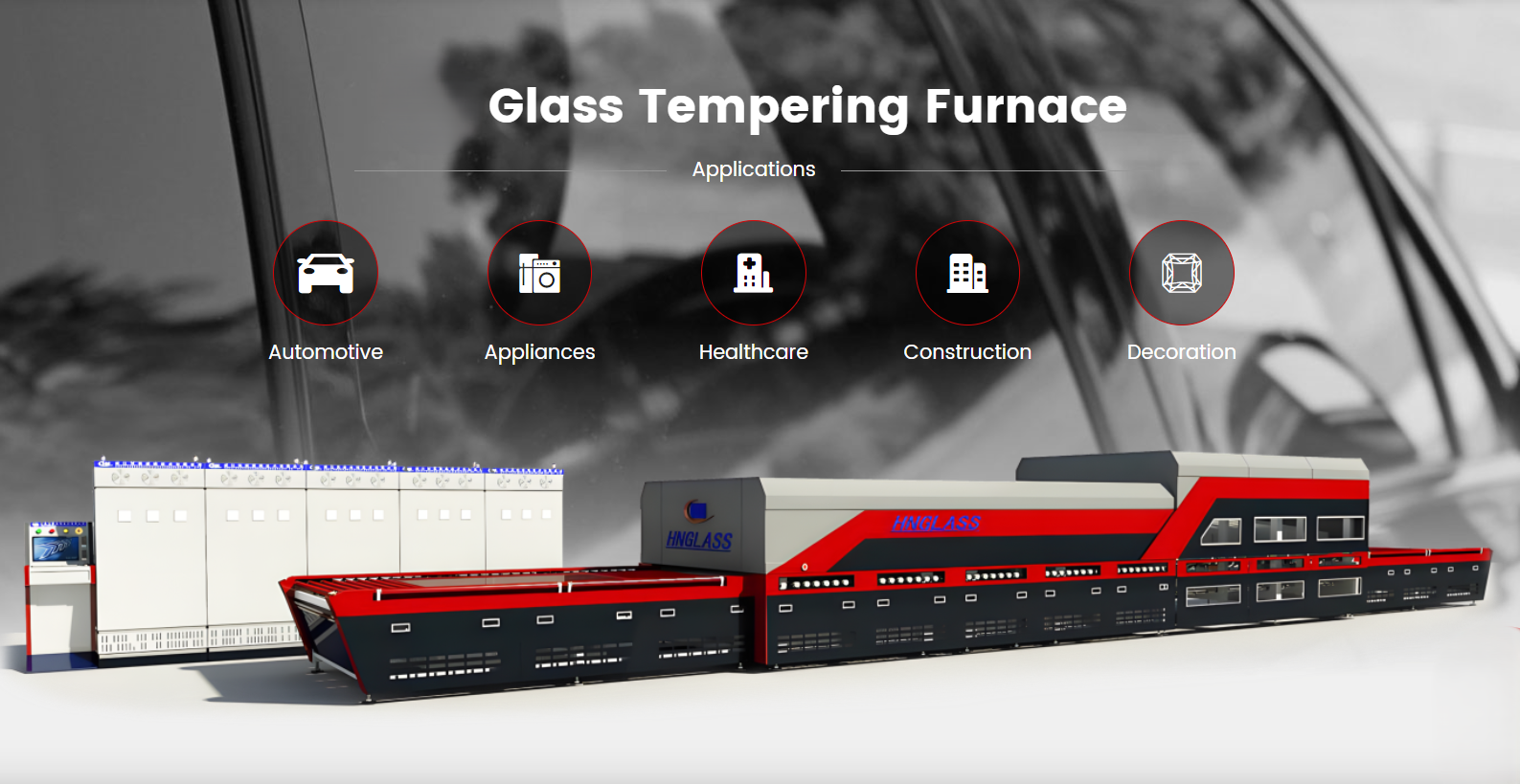
Glass tempering furnaces are widely used to manufacture architectural glass, automotive glass, shower doors, curtain walls, furniture glass, appliance glass, solar glass, and many other safety glass products.
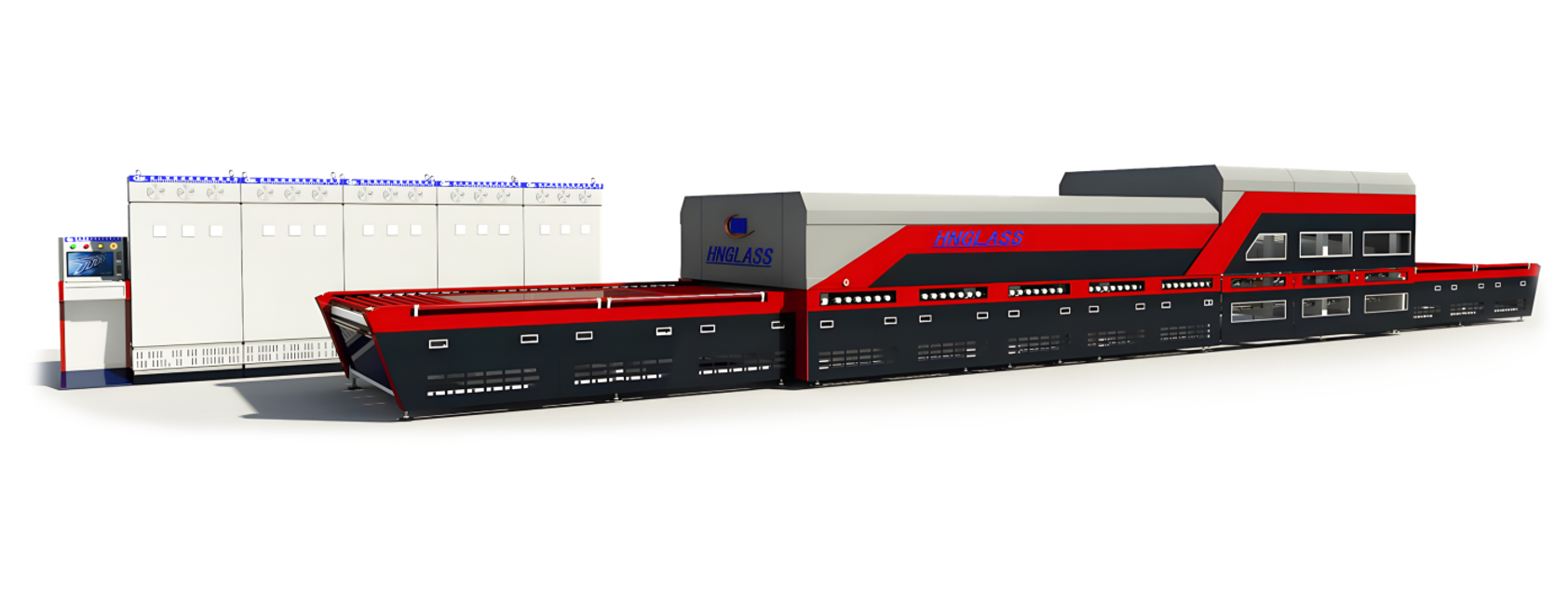
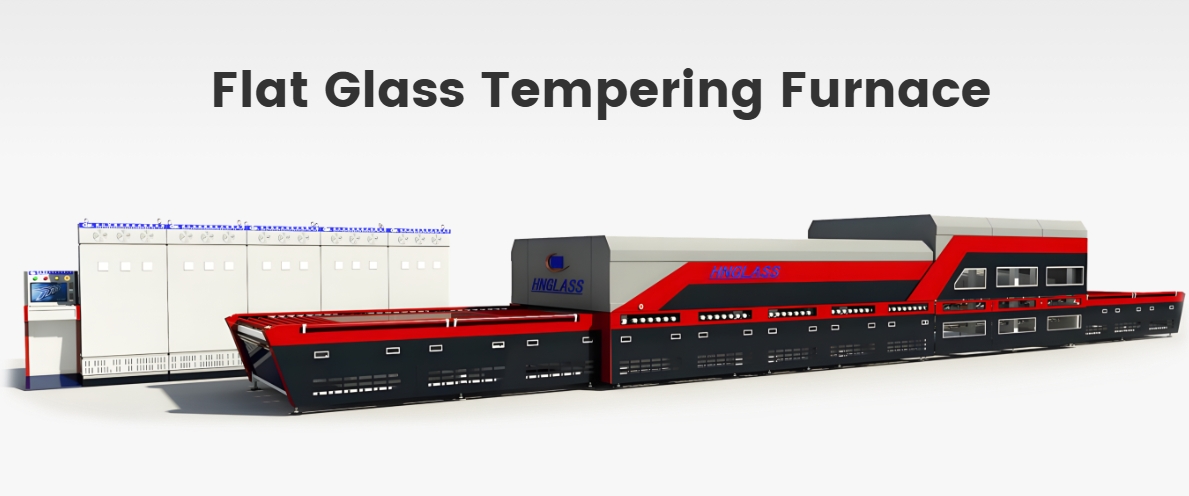
A glass tempering furnace, also called a glass tempering machine, glass toughening furnace, or glass tempering production line, is industrial equipment designed to transform ordinary annealed glass into tempered safety glass through controlled heating and rapid air quenching.
Unlike laminated glass, which improves safety by bonding multiple glass layers together, tempered glass gains its strength from a thermal treatment process that changes the internal stress distribution of the glass.
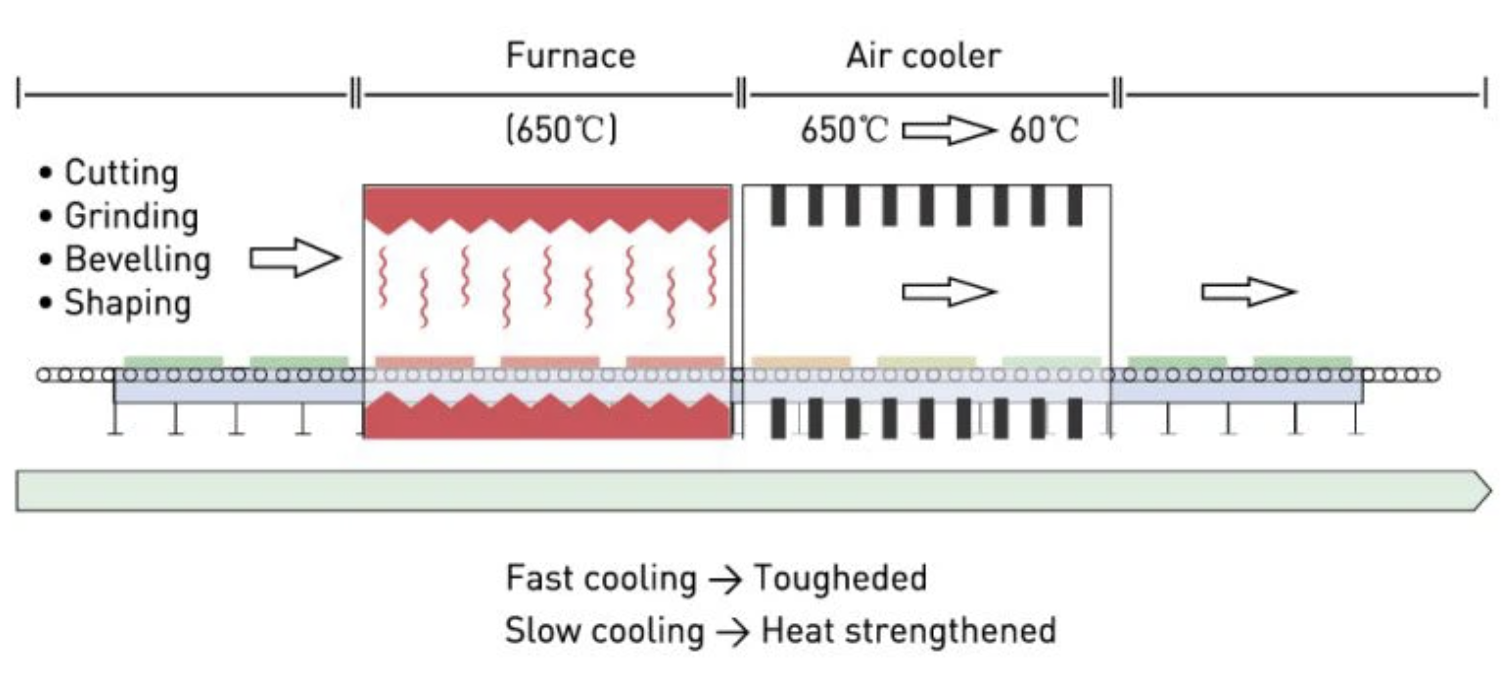
The production process involves three primary stages:
The resulting tempered glass offers:
Because of these advantages, glass tempering furnaces have become essential equipment in modern glass processing plants.
Ordinary glass can easily crack under impact or sudden temperature changes. When broken, it forms long, sharp shards that may cause serious injury.
Tempered glass behaves differently.
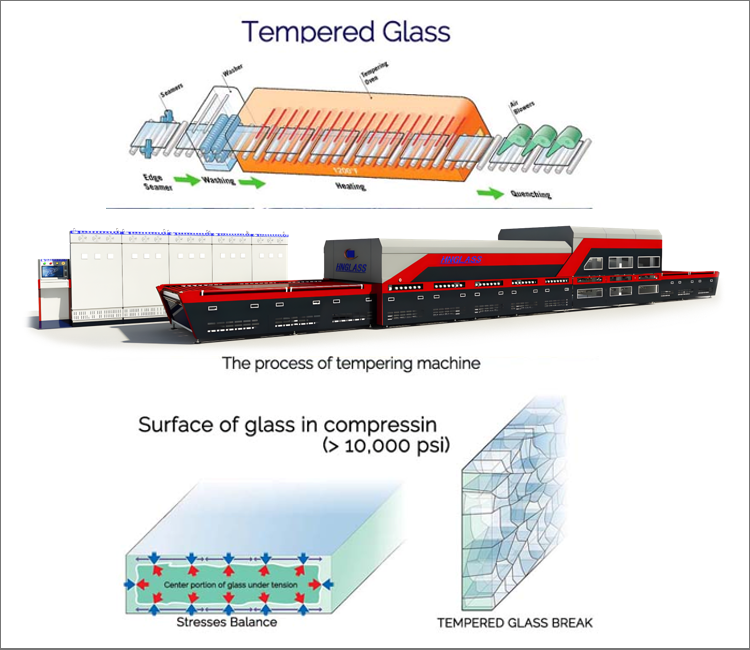
After tempering, the glass surface remains under permanent compression while the center remains under tension. This internal stress structure significantly improves strength and causes the glass to break into many small particles instead of dangerous sharp fragments.
Tempered glass is required or recommended for many applications, including:
The tempering process follows a carefully controlled sequence.
Before entering the furnace, the glass is inspected for scratches, chips, and contamination. Any defects may become more visible after tempering.
The glass is transferred onto ceramic rollers and enters the heating chamber.
Automatic loading systems improve production efficiency while reducing handling damage.
Electric heating elements gradually raise the glass temperature to approximately 620–700°C.
Modern furnaces divide the heating chamber into multiple independently controlled heating zones to ensure uniform temperature distribution.
The glass continuously oscillates during heating to minimize temperature differences across the sheet.
Once the target temperature is reached, the furnace maintains a short soaking period.
This allows heat to penetrate evenly through the entire glass thickness before quenching.
Proper temperature equalization is critical for achieving consistent tempering quality.
The heated glass immediately enters the quenching section.
High-pressure air is blown simultaneously onto both glass surfaces.
The outer surfaces cool rapidly while the core cools more slowly.
This controlled cooling creates permanent compressive stress on the surface and tensile stress inside the glass.
After quenching, the tempered glass cools to room temperature.
The finished glass is inspected for:
Only qualified glass proceeds to packaging.
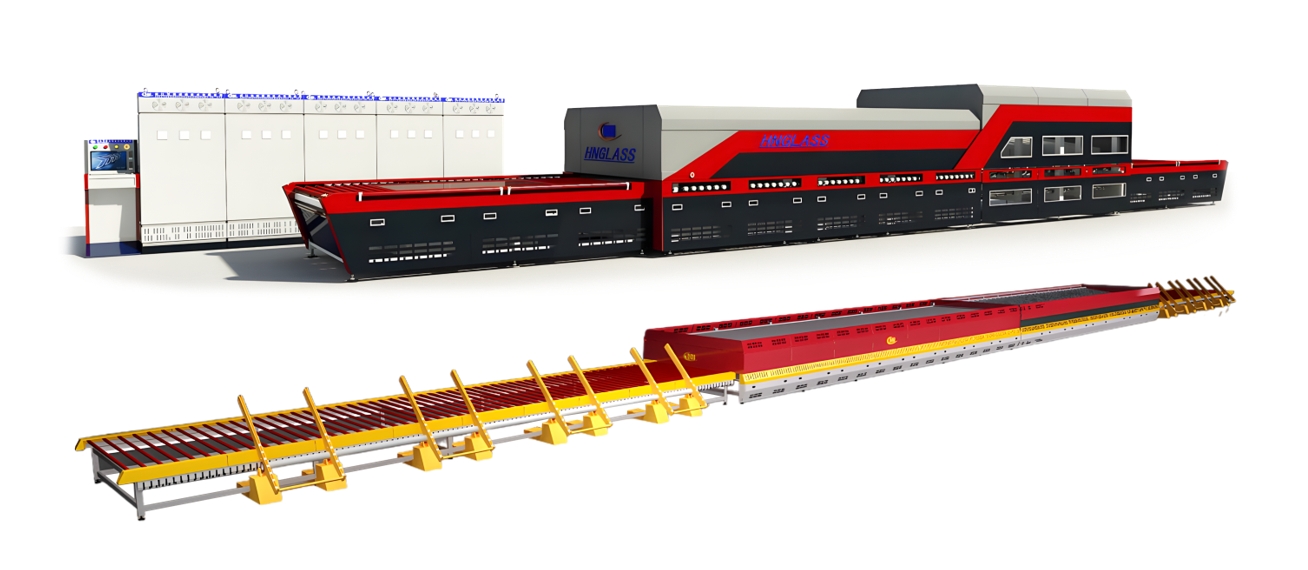
A modern industrial glass tempering furnace consists of several integrated systems.
| Component | Function |
|---|---|
| Loading Conveyor | Transfers glass into the furnace |
| Ceramic Rollers | Support and transport glass |
| Heating Chamber | Raises glass temperature |
| Electric Heating Elements | Generate thermal energy |
| Temperature Control System | Controls heating zones |
| PLC Control System | Coordinates the production process |
| Convection System | Improves heat transfer efficiency |
| Turbo Blower | Supplies circulating hot air |
| Quenching Section | Rapidly cools the glass |
| Cooling Conveyor | Delivers finished tempered glass |
Different industries require different furnace configurations.
Radiation furnaces transfer heat mainly through infrared radiation.
Suitable for:
Advantages:
Limitations:
Forced convection furnaces use circulating hot air to improve heat transfer.
Suitable for:
Advantages:
Designed specifically for flat glass production.
Typical applications include:
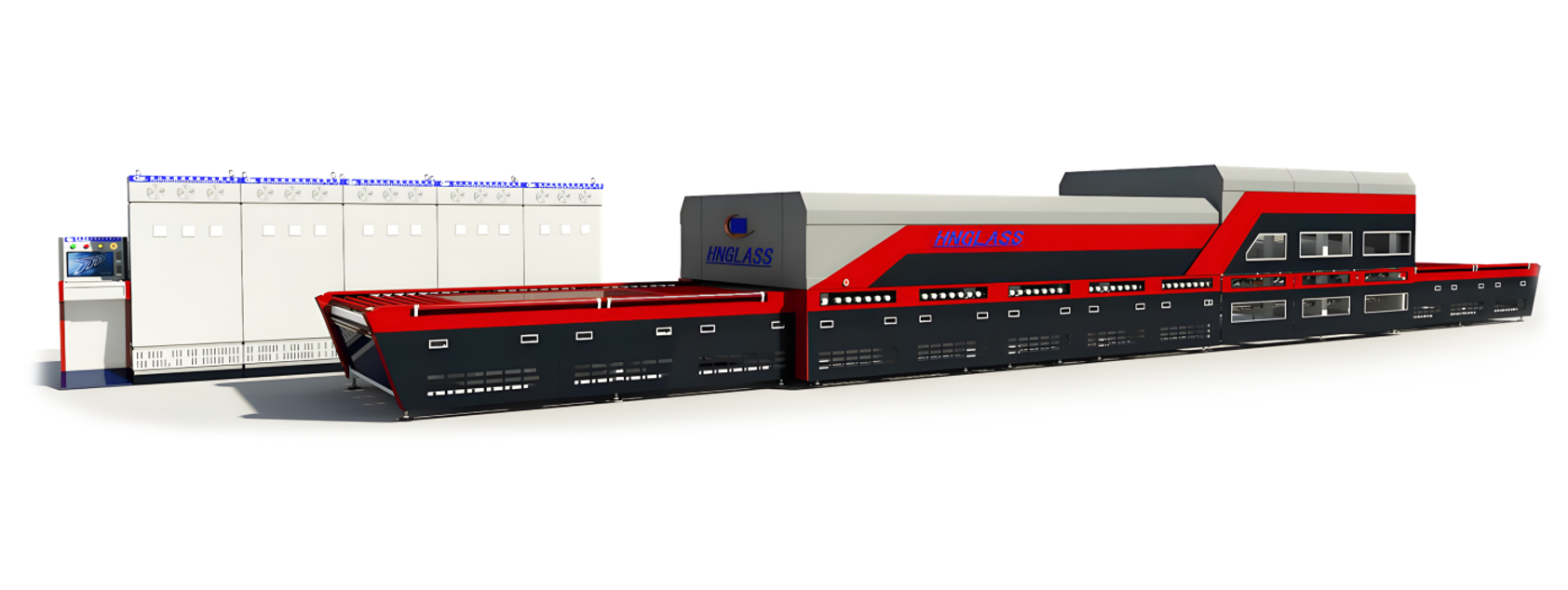
Produces both flat and curved tempered glass.
Widely used for:
Designed for high-volume manufacturing with continuous production.
Suitable for:
Specially designed for processing glass thicknesses below 4 mm.
Used in:
Forced convection is one of the most important innovations in modern glass tempering.
Instead of relying only on radiant heat, high-temperature air is continuously circulated over the glass surfaces.
This technology provides:
For manufacturers processing coated glass, forced convection technology has become the preferred solution.
Turbo blower systems improve furnace efficiency by delivering stable, high-volume hot air circulation.
Compared with conventional blower systems, turbo technology offers:
Energy savings may reach 15–30%, depending on furnace design, glass type, production capacity, and operating conditions.
Typical industrial glass tempering furnaces include the following specifications.
| Item | Typical Range |
|---|---|
| Glass Thickness | 2.5–25 mm |
| Maximum Width | Up to 3,300 mm |
| Maximum Length | Up to 18,000 mm |
| Heating Temperature | 620–700°C |
| Heating Zones | 4–16 |
| Heating Method | Radiation or Forced Convection |
| Cooling Method | High-Pressure Air Quenching |
| Installed Power | 300–3,000 kW |
| Control System | PLC + Touchscreen HMI |
Actual specifications vary according to furnace model and production requirements.
Glass tempering technology supports many industries.
Selecting the right furnace depends on several factors.
Consider whether you process:
Different furnace designs support different thickness ranges.
Ultra-thin glass usually requires advanced convection technology.
Estimate daily output requirements before selecting furnace size.
Higher production volumes generally justify more advanced automation.
Electricity is one of the largest operating costs.
Modern energy-saving systems can significantly reduce long-term operating expenses.
Evaluate:
Higher-quality products often require more advanced furnace technologies.
Modern furnaces offer:
Automation improves productivity while reducing labor costs.
| Defect | Possible Cause | Recommended Solution |
|---|---|---|
| Roller Wave | Uneven heating | Optimize temperature profile |
| Bow | Improper quenching | Adjust air pressure balance |
| White Spots | Surface contamination | Improve glass cleaning |
| Optical Distortion | Excessive heating | Optimize heating parameters |
| Edge Breakage | Poor handling | Improve loading accuracy |
Regular maintenance and proper process control help minimize defects.
To maximize furnace performance:
Routine maintenance improves production quality and extends equipment lifespan.
For international buyers, selecting the right glass tempering furnace manufacturer is not only about equipment price. A reliable supplier should have proven manufacturing experience, advanced heating technology, large-format processing capability, and strong overseas service support.
Before purchasing a glass tempering furnace from China, buyers should evaluate the following factors.
Large-format architectural glass requires furnaces with sufficient loading and processing capacity.
Check whether the manufacturer can provide solutions for:
| Furnace Capability | Typical Applications |
|---|---|
| 2440 × 3660 mm | Standard architectural glass |
| 3300 × 6000 mm | Large curtain wall glass |
| 3300 × 18000 mm | Jumbo architectural projects |
| Extra-large tempering lines | High-volume glass processors |
Large-size furnace capability is especially important for:
A professional glass tempering furnace manufacturer should support different glass materials and applications.
Typical processing capability includes:
| Glass Type | Application |
|---|---|
| Clear float glass | Buildings and furniture |
| Low-E coated glass | Energy-efficient architecture |
| Ultra-thin glass | Electronics and appliances |
| Automotive glass | Vehicle glazing |
| Solar PV glass | Photovoltaic modules |
| Bent tempered glass | Curved architectural applications |
The heating system directly affects glass quality, productivity, and energy consumption.
Important technologies include:
These technologies influence:
For Low-E glass processing, forced convection technology is increasingly preferred because it improves heating uniformity and reduces coating-related defects.
Before choosing a supplier, international buyers should review:
A manufacturer with extensive installation experience usually provides better technical support during commissioning and operation.
For international glass processors, after-sales capability is a key consideration.
Important service factors include:
Reliable support helps reduce downtime and improves long-term production efficiency.
Different projects require different equipment capabilities.
Commonly considered manufacturers include:
Suitable for:
Commonly considered manufacturers include:
Suitable for:
Commonly considered manufacturers include:
Suitable for:
Most glass tempering furnaces heat glass to approximately 620–700°C, depending on glass type, thickness, coating, and process requirements.
Tempered glass is typically four to five times stronger than ordinary annealed glass under similar conditions.
Yes. Modern forced convection glass tempering furnaces are specifically designed to process both hard-coat and soft-coat Low-E glass with improved heating uniformity.
Cycle time depends on glass thickness, furnace configuration, heating technology, and production settings. Thin glass generally requires shorter heating times than thick glass.
Glass tempering furnaces are widely used in architectural glass processing, automotive manufacturing, solar energy, household appliances, furniture production, rail transportation, and electronic display manufacturing.
A glass tempering furnace is one of the most important pieces of equipment in modern glass manufacturing. By combining precise heating, controlled temperature distribution, and rapid air quenching, it produces high-strength safety glass for a wide range of industries.
As demand continues to grow for energy-efficient buildings, advanced glazing systems, solar panels, and smart appliances, manufacturers increasingly require furnaces that deliver higher productivity, better optical quality, lower energy consumption, and reliable processing of Low-E and ultra-thin glass.
Whether you are planning a new glass processing line or upgrading existing equipment, understanding furnace types, heating technologies, specifications, and selection criteria will help you choose a solution that meets both current production needs and future business growth.